
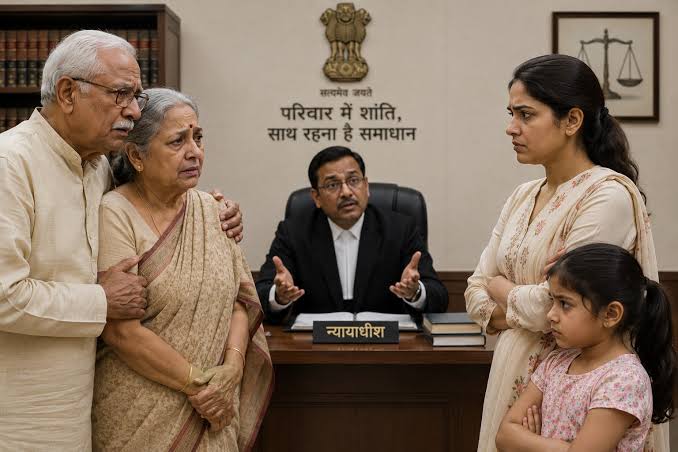
Daughter-in-Law Property Rights: Can a Mother-in-Law Evict Her?
Can a mother-in-law evict her daughter-in-law from her property? Does a daughter-in-law have an absolute right to live in her matrimonial home? Recent Delhi High Court decisions have brought these questions back into focus, particularly where senior citizen property rights and shared household rights under the Domestic Violence Act come into conflict.
The legal position is clear: neither side has an automatic or absolute right in every case. The outcome depends on ownership, the nature of the property, whether it qualifies as a shared household, the circumstances of residence and the rights of senior citizens and other family members.
Delhi High Court on Daughter-in-Law Eviction
In Punam v. Divisional Commissioner, GNCT of Delhi, W.P.(C) 11683/2022, the Delhi High Court examined the validity of provisions under the Delhi Maintenance and Welfare of Parents and Senior Citizens Rules, 2009, concerning protection of senior citizens from non-maintenance and ill-treatment.
The Court upheld the relevant provisions and declined to interfere with the eviction order passed against the daughter-in-law from the senior citizen's property.
The judgment reinforces that senior citizens have statutory protection to peacefully enjoy and protect their property.
Does a Daughter-in-Law Have an Absolute Right to Stay?
No.
Section 17 of the Protection of Women from Domestic Violence Act, 2005 recognises a woman's right to reside in a shared household. However, a right of residence does not automatically mean ownership of the property.
At the same time, recent Delhi High Court proceedings have also emphasised that senior-citizen proceedings cannot mechanically be used to defeat a genuine residence claim under the Domestic Violence Act. The facts of each case therefore remain crucial.
When Can a Daughter-in-Law Be Evicted?
An eviction dispute may depend upon factors such as:
- Who owns the property?
- Is it the self-acquired property of the mother-in-law or father-in-law?
- Is it an ancestral or jointly owned property?
- Does the property constitute a shared household?
- Is there a pending domestic violence or matrimonial case?
- Are minor children residing in the property?
- Has the senior citizen alleged harassment, ill-treatment or non-maintenance?
- Are separate proceedings regarding ownership, inheritance or partition pending?
Therefore, simply being a daughter-in-law does not automatically confer ownership or an unconditional right to remain in the property.
Senior Citizens Also Have Legal Protection
The Maintenance and Welfare of Parents and Senior Citizens Act, 2007 and the applicable Delhi Rules provide mechanisms for protecting senior citizens and their property.
Where an elderly parent is facing serious conflict or alleged ill-treatment in their own property, appropriate proceedings may be available for protection and, depending upon the facts, eviction.
However, self-help eviction, forcible dispossession or harassment should be avoided. The appropriate legal procedure should be followed.
What Should a Daughter-in-Law Do If She Faces Eviction?
A daughter-in-law receiving an eviction notice should not ignore it. She should immediately examine:
- Whether the property is a shared household;
- Whether she has an existing residence order under the Domestic Violence Act;
- Whether any court order already protects her or her children;
- Who legally owns the property;
- Whether the eviction proceedings have followed the prescribed procedure.
Depending on the facts, she may have remedies under the Domestic Violence Act, civil law or appropriate appellate/constitutional proceedings.
FAQs
Can a mother-in-law evict her daughter-in-law from her property?
Yes, an eviction may be possible in appropriate circumstances, particularly where the senior citizen is legally entitled to protect her property. The exact remedy depends on the facts and applicable proceedings.
Does a daughter-in-law get ownership of her mother-in-law's property?
No. Merely being a daughter-in-law does not create ownership rights in the mother-in-law's self-acquired property.
Does a daughter-in-law have a right to live in her matrimonial home?
A woman may have a statutory right of residence in a shared household under the Domestic Violence Act. Whether that protection applies to a particular property depends on the facts and applicable law.
Conclusion
Daughter-in-law property disputes require careful examination of both property law and matrimonial law. Senior citizens have important legal rights over their property, while women may have statutory protection concerning residence in a shared household.
Legal Crusader provides legal assistance in matrimonial disputes, property disputes, domestic violence matters and civil litigation across Delhi NCR.